

In the Media
 Faculty Co-Director Andrew Weissmann joins PBS and NPR’s KQED to discuss his case for stemming the effects of political deception and strengthening U.S. democratic institutions. Gallery
Faculty Co-Director Andrew Weissmann joins PBS and NPR’s KQED to discuss his case for stemming the effects of political deception and strengthening U.S. democratic institutions.
 As the U.S. enforces a naval blockade on Iran against vessels flagged under states that are not a party to the conflict, Non-Resident Senior Fellows Rebecca Ingber and Brian Finucane explore the surfacing tensions between two bodies of applicable law. Gallery
As the U.S. enforces a naval blockade on Iran against vessels flagged under states that are not a party to the conflict, Non-Resident Senior Fellows Rebecca Ingber and Brian Finucane explore the surfacing tensions between two bodies of applicable law.
 In Just Security, Distinguished Scholar Michael Schmitt and Faculty Co-Director Ryan Goodman offer an analysis of the law of armed conflict as applied to a reported Israeli campaign to kill or capture every individual involved in the October 7th massacre. Gallery
In Just Security, Distinguished Scholar Michael Schmitt and Faculty Co-Director Ryan Goodman offer an analysis of the law of armed conflict as applied to a reported Israeli campaign to kill or capture every individual involved in the October 7th massacre.
 Non-Resident Camille Stewart Gloster coauthors a piece for Tech Policy Press on the changing locus of consumer decision-making: from directly navigating interfaces to delegating judgement in agent-mediated commerce. Gallery
Non-Resident Camille Stewart Gloster coauthors a piece for Tech Policy Press on the changing locus of consumer decision-making: from directly navigating interfaces to delegating judgement in agent-mediated commerce.
 In a New York Times op-ed, Faculty Co-Director Andrew Weissmann argues that in order to stop the Trump administration’s vindictive prosecutions, grand jury votes in favor of criminal charges must meet a higher factual standard than mere probable cause. Gallery
In a New York Times op-ed, Faculty Co-Director Andrew Weissmann argues that in order to stop the Trump administration’s vindictive prosecutions, grand jury votes in favor of criminal charges must meet a higher factual standard than mere probable cause.
- For the New York Times, Non-Resident Senior Fellow Brian Finucane weighs in on reports that Guatemala has agreed to joint strikes with the U.S. against narcotics trafficking groups within its borders Gallery
For the New York Times, Non-Resident Senior Fellow Brian Finucane weighs in on reports that Guatemala has agreed to joint strikes with the U.S. against narcotics trafficking groups within its borders
 As Bellingcat reports findings of banned Russian-made cluster bomblets in a village in northern Mali, Non-Resident Senior Fellow Brian Finucane weighs in on Mali’s legal obligations as a signatory to the Convention on Cluster Munitions. Gallery
As Bellingcat reports findings of banned Russian-made cluster bomblets in a village in northern Mali, Non-Resident Senior Fellow Brian Finucane weighs in on Mali’s legal obligations as a signatory to the Convention on Cluster Munitions.
- Faculty Co-Director Andrew Weissmann sits down with NPR to explain a DOJ settlement granting President Trump immunity from pending tax audits and setting up a fund for victims of “government weaponization.” Gallery
Faculty Co-Director Andrew Weissmann sits down with NPR to explain a DOJ settlement granting President Trump immunity from pending tax audits and setting up a fund for victims of “government weaponization.”
- Writing in Just Security, Distinguished Scholar Michael Schmitt examines the Trump administration’s contradictory messaging on the status of its multiple armed conflicts and offers an explainer on when war legally begins and ends. Gallery
Writing in Just Security, Distinguished Scholar Michael Schmitt examines the Trump administration’s contradictory messaging on the status of its multiple armed conflicts and offers an explainer on when war legally begins and ends.
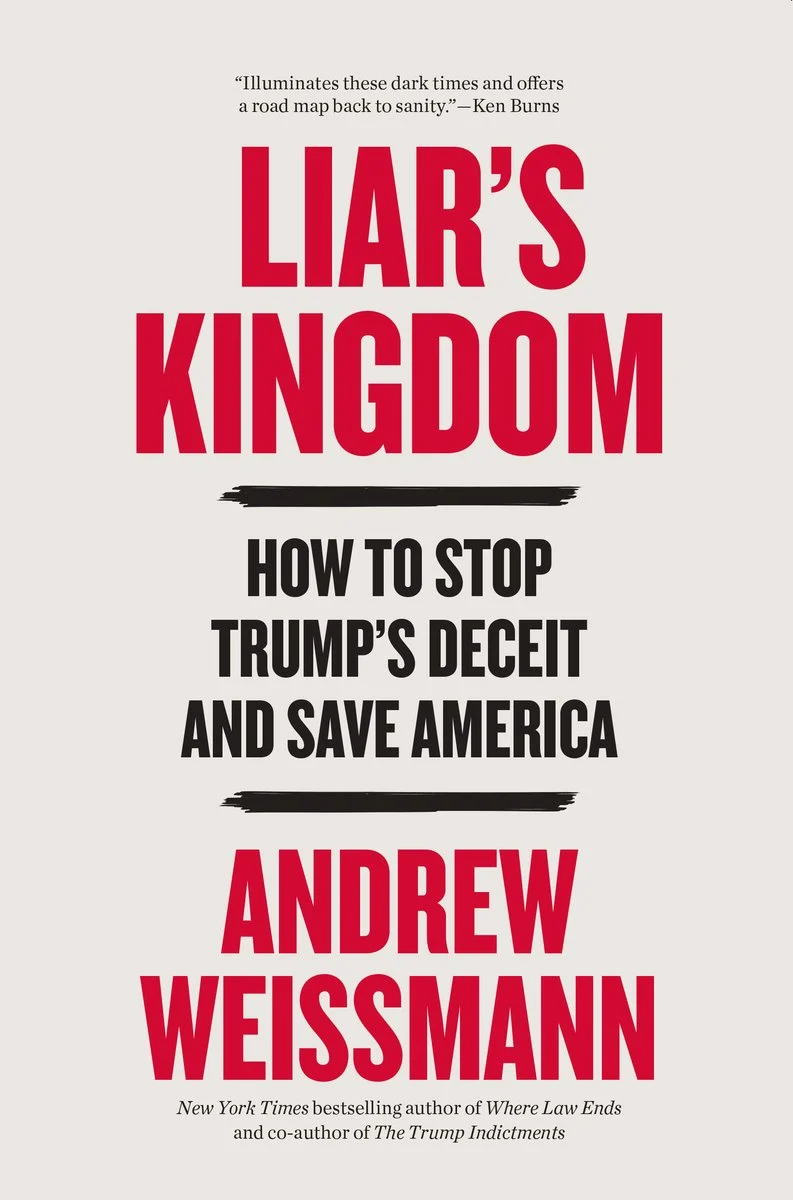 In his new book Liar’s Kingdom: How to Stop Trump’s Deceit and Save America, Faculty Co-Director Andrew Weissmann explores the problem of the nation’s systemic vulnerability to political lies, and poses a path forward through reforms to the law. Gallery
In his new book Liar’s Kingdom: How to Stop Trump’s Deceit and Save America, Faculty Co-Director Andrew Weissmann explores the problem of the nation’s systemic vulnerability to political lies, and poses a path forward through reforms to the law.