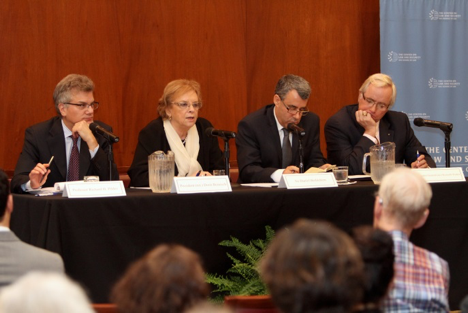
• National Security Advisors: Advising Governments on Military Force and National Security

    Lipton Hall 108 West 3rd Street, New York, New York

    The Center on Law and Security Presents: National Security Advisors: Advising Governments on Military Force and National Security The video of this event is available, click here to watch. Featuring: President (ret.) Dorit Beinisch Supreme Court of Israel Sir Daniel Bethlehem KCMG QC Former Legal Adviser to the United Kingdom Foreign & Commonwealth Office Brigadier
  • A Conversation with Author Daniel Klaidman

    On Tuesday December 11, 2012 CLS hosted a conversation with Daniel Klaidman, author of Kill or Capture: The War on Terror and the Soul of the Obama Presidency. Daniel Klaidman is a special correspondent for Newsweek and The Daily Beast who reports on terrorism and national security, and discussed the Obama administration’s counter-terrorism policy with

  • Discussion with Professor Yoram Dinstein

    The Center on Law and Security hosted a discussion with Yoram Dinstein, professor emeritus of law at Tel Aviv University, on Wednesday, February 6, 2013.  Professor Dinstein is a renowned expert on armed conflict and discussed some of the pressures on the Laws of Armed Conflict caused by the predominance of asymmetric warfare in the

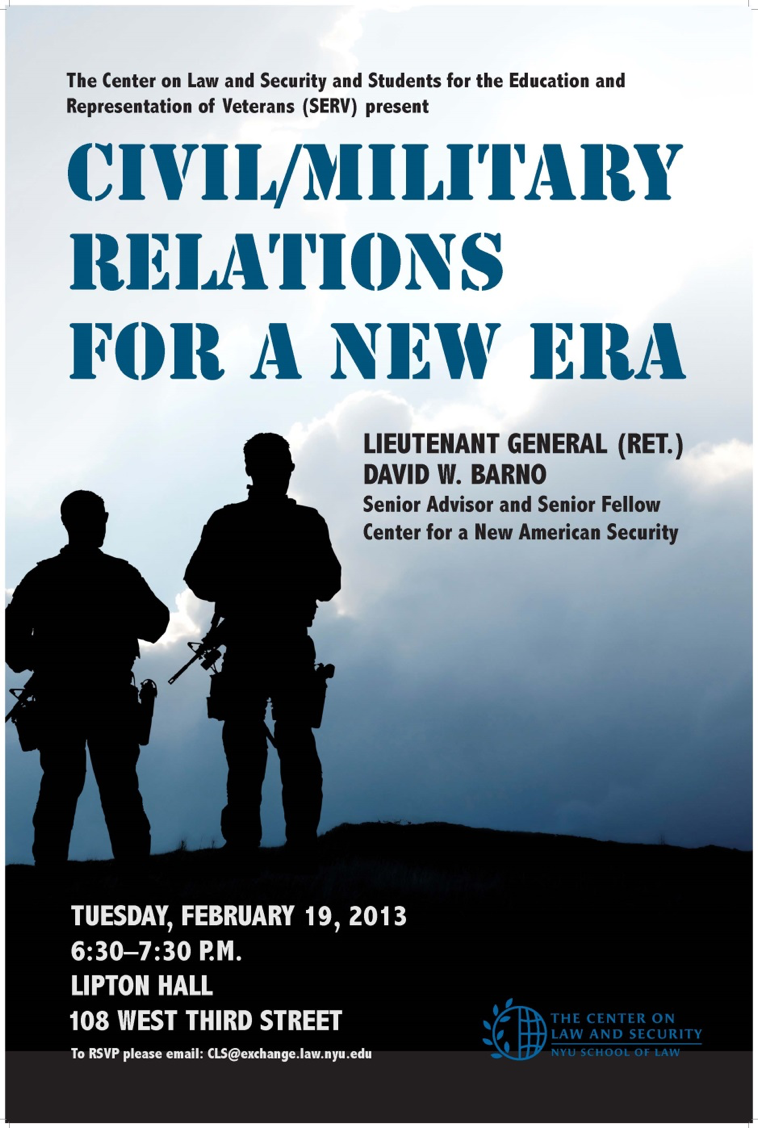
  • Civil/Military Relations For a New Era

    Lipton Hall 108 West 3rd Street, New York, New York

    The Center on Law and Security and Students for the Education and Representation of Veterans (SERV), a new student group at NYU School of Law dedicated to veterans’ advocacy, hosted a discussion titled "Civil/Military Relations for a New Era," by Lieutenant General (Ret.) David W. Barno, senior advisor and Senior Fellow at the Center for

  • A Conversation with Gregory Johnsen, author of “The Last Refuge: Yemen, al-Qaeda, and America’s War

    The Center on Law and Security hosted a conversation with Gregory Johnsen, author of The Last Refuge: Yemen, al-Qaeda, and America’s War in Arabia on Wednesday, March 6, 2013. Johnsen discussed the development of al-Qaida in Yemen and America’s policy response, including some of the factors that affect the efficacy of counterterrorism strikes there.  Johnsen

  • CLS Discussion with NCTC Director Matthew Olsen

    On Monday April 15, 2013, the Center on Law and Security was honored to host the Director of the National Counterterrorism Center, Matthew Olsen.  Director Olsen reports directly to the President and the Director of National Intelligence, and is the leader of the organization tasked with directing our nation’s effort to combat terrorism at home

  • UK and US Counter-radicalization and Counterterrorism

    On April 9, 2013 the Center on Law and Security hosted a lecture on the British and American experiences with counter-radicalization, counter-extremism, and engagement with Islamist groups in both countries’ struggle against terrorism in the post-9/11 era.  The panelists discussed the current terrorism threat environment, both foreign and domestic, as well as significant foreign policy

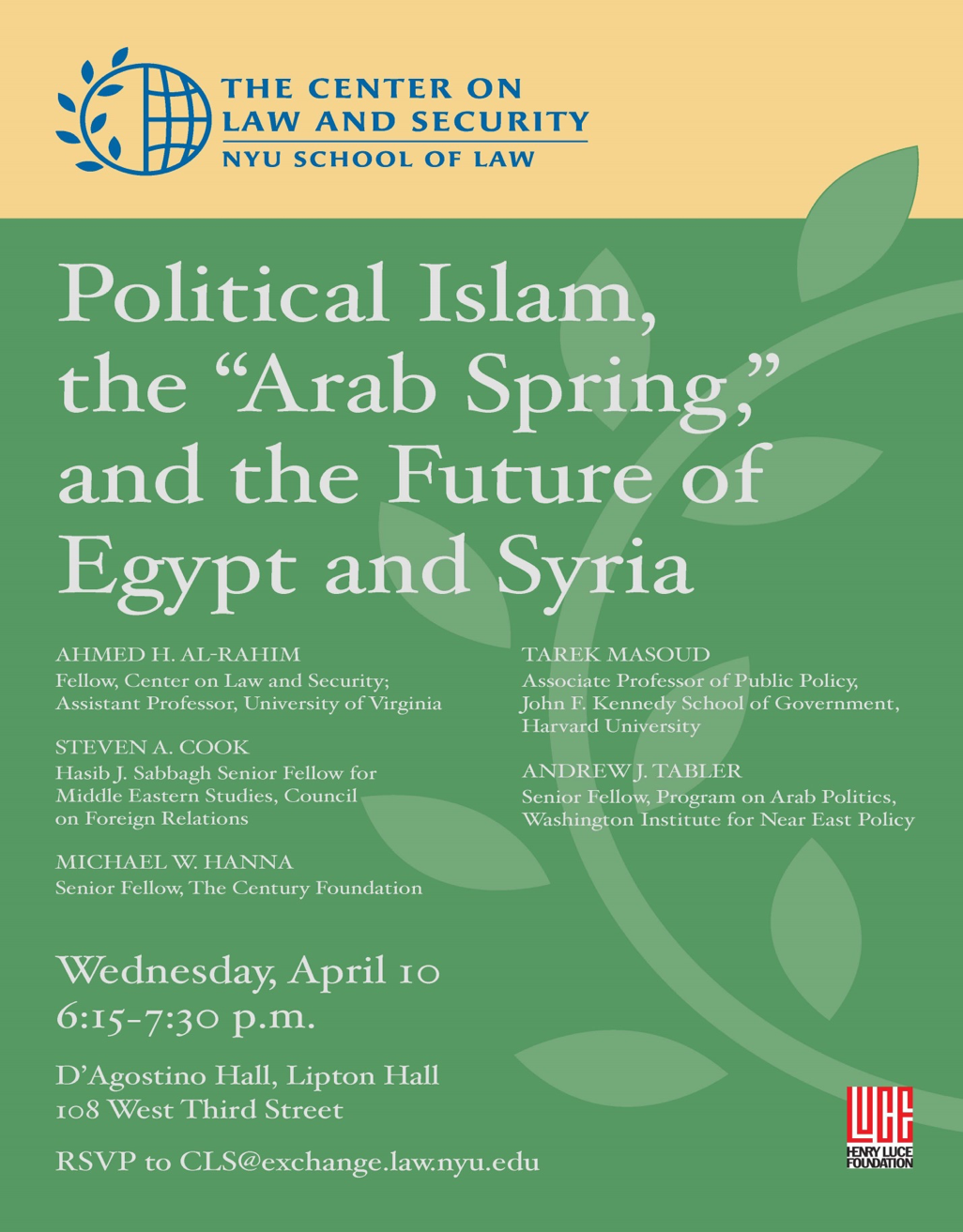
  • Political Islam, the “Arab Spring,” and the Future of Egypt and Syria

    D’Agostino Hall 108 West 3rd Street, New York, New York

    In the aftermath of the "Arab Spring" Islamist political parties came to control several Middle East countries, and important elements of the Syrian opposition.  It is, nonetheless, not clear whether or to what extent religious doctrine, as opposed to secular considerations, is responsible for their foreign policy choices.  This event will explore the factors that

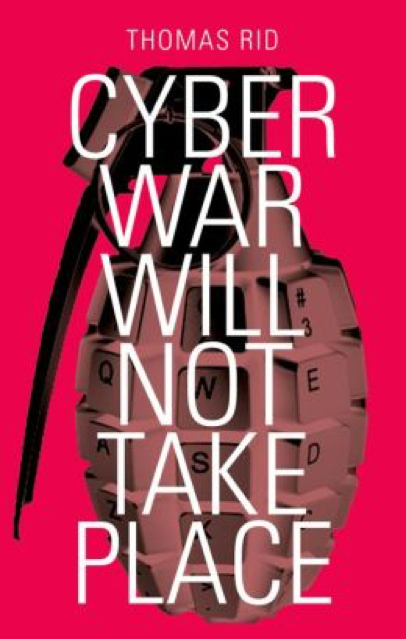
  • Cyber-security Discussion with Dr. Thomas Rid

    The Center on Law and Security was pleased to host Thomas Rid, author of the new book Cyber War Will Not Take Place on September 16, 2013.  Dr. Rid discussed issues revolving around how best to understand the threat picture in cyber-space, and whether or not “cyber war” is the best framework.  His book argues that sabotage, espionage,

  • Guardian or Big Brother?: The NSA Data Sweeps

    Ongoing disclosures about the extent of NSA communication monitoring have sparked numerous headlines—and almost as many questions. Should an American care, for example, that the NSA may log the time and duration of a phone call he or she makes to a cousin in Boise or Bangalore? As we seek to balance national security and